Roughly two to three weeks ago I went to the school library and made a list of all of the books they had in English or were related to learning English. There were over a hundred of them, and it took me about an hour to log them all. The librarian said that there was no way for her to quickly or easily take an inventory of the books written in English, so I did this project in order to help encourage students to go and read them.
I was able to use some of the newly discovered books in English club, and when I was returning them I got into a conversation with the librarian about how I’d love to read some of the Japanese books, but it would take me far more than the allowed month to get through even half of one. She then talked me into borrowing two picture books so I brought them back to my desk and have been chipping away little by little when I have a few minutes to spare.
One book that she recommended is called 「100万回生きたねこ」which means The Cat Who Lived One Million Times. In each of his lives he belonged to someone different. He never liked the humans he lived with and he never liked his life. Every time he died, his owner would mourn his death. The cat never felt sad about dying and never liked his new life any better than the last.
Finally, he was born a stray alley cat. He enjoyed his independent life. He loved himself more than anything or anyone else. One day, he met a beautiful cat and fell in love with her. He spent every day by her side. They lived a life together and raised a family. One day, the beautiful cat passed away in her sleep. The alley cat wept and wept for her. He had never cried before, and he had never loved before. He lay by her side and wept every day until one day, he wept no more. He did not wake up again, and he was not re-born again.
I was told that this is a famous book in Japan. How do you interpret it?
I’m so happy that I’m able to read so much for fun these days. When I was in High School and college I remember wishing that I had more time for pleasure reading. I do miss school sometimes, but it’s nice that I can focus on exactly the books I want to read. :0)
Last week we had what was equivalent to a school pep rally for the city-wide sports day. If I thought the English club participation was lame, it seems that Isawa JH only has five people on the boy’s basketball team. The people involved in sports participated at various schools while the people who aren’t in any sports had a half day of school. I was able to stay in the office and catch up on some backed-up work. I ended up spending the morning watching the different events that were being hosted at our school. I went to see soft tennis, boys and girls, gymnastics, soccer, and kyudo. It was an interesting experience and I think that the students were happy that I showed up, even if I was only there for a short time. I also learned some new things and it felt like I was on an assignment as a reporter doing cultural research. I really enjoyed that feeling and I am wondering more and more if I could get some gigs doing freelance writing. My thoughts are a little hard for me to organize and my writing is amateur, but I don’t think that it's something I can’t learn to fix. Typically my blog posts are just a jumble of thoughts that I write down on the Internet in order to let friends and family know what’s going on in my life. I would appreciate any feedback, positive or negative, about my writing and how I could make it better. Please feel free to post a comment below, or E-mail me with your suggestions. Even if you don’t know me personally but read my blog from time to time, I would be very thankful for your advice.
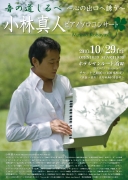
On May 30th we had a pretty well known pianist come to play at Isawa. There were TV cameras and the works. His name is Kobayashi Masato, and the name of the assembly was called 「明日を信じて」meaning “Believe in tomorrow.”
In other news regarding school, I am looking for a JHS that wants to do a letter exchange with students in Japan. They can be written in Japanese or in English. English is preferred. If you know of a school that might be interested, please contact me.
There is a bird in Japan called the 郭公(カッコウ), or in English “cuckoo.” You know, like the chime on the old clocks that go “cuckoo, cuckoo.” The first time I heard this sound I thought it was a chime or someone’s phone. It sounded so fake! I later discovered that the cuckoo is in fact not a fictional animal, and that it really exists. Why do I feel like I was the only one in the dark about this??
Here is the picture and a sound clip. They sound EXACTLY like that. I’ve never heard one of these in America, so I was really surprised.
Japan is very good about many things regarding the environment, however they are also very bad in other ways. For example, a lot of companies and households have decided to limit electricity intake and install solar panels on many of the buildings. Cars are smaller, in most homes and buildings there is no such thing as central heating or cooling systems, and the eco-style of grocery bags caught on a while ago. There is also a very good recycling system in place and a high percentage of the citizens in the country actually use it. This being said however, almost everything in Japan is individually wrapped and packaged. From foods to daily goods, it is hard to find anything without tons of wasted paper and plastic. Despite high recycling rates, I feel like this part of their culture could become more eco-friendly.
I’m feeling very “eco” inspired recently. I guess the point is not to give up everything, but to only use what you need, or at least cut down on the waste. I called the company that owns my apartment building and discussed doing something about a compost. I asked if it were possible for me to deposit dirt or food scraps out in the backyard. I could create my own compost inside with worms, or just put the old food scraps out there and let them decompose naturally. The company said that they would have to talk with the landlord and I would have to wait until next week for an answer, but it still made me feel like I was at least moving in the right direction. Also, I haven’t had to take out my garbage for two weeks now, simply because there isn’t any. I haven’t used any paper towels or tissues in two weeks either.
Because of a school trip this past week and an open viewing of classes for the first years, we had school on Saturday and the day off on Monday (today). There was no school lunch and usually the teachers order lunch out. It always arrives in a plastic container with wooden disposable chopsticks. I decided to opt out of the take-out lunch and make my own. I made it this morning, brought it in reusable Tupperware with my own reusable chopsticks, and wrapped it all in a furoshiki 風呂敷. Instead of using plastic bags, I would suggest more people use furoshikis. They are traditional Japanese cloths that come in many shapes and sizes, and you simply wrap up your stuff in the cloth and it’s done! It doesn’t tear, and it forms to the shape of the items inside so I find them to be incredibly useful.


You can use them for anything. Instead of wrapping gifts with paper, you can wrap them with the cloth and it either becomes part of the gift or you can take it back with you/use it again for something else when you’re done. You can even use them for shopping bags, lunch boxes, or bottle wraps. There are ways to use them as shawls even, or decorative belts.
I don’t think these are from Japan, but here are a few sites that sell them.
Or, you could make your own.
Sunday was a very good day.
It started pretty early despite the fact that most people prefer to sleep in on Sundays. So, I started the day with a book and a cup of coffee and around 8:15 AM I went down the street to a small vegetable stand. It is really close, so I'd like to go often. They sell various plants, fruits and vegetables based on what was brought to the shop that morning by local farmers. The main attractions of going there are 1) local foods 2) communicating with the Japanese residents and 3) most of the food there can be bought unpackaged.
After the eco-vegetable trip (with a free shiso plant thrown in there for good measure), Elliott and I went to a city sponsored cherry-picking event. When we got to where we thought it would be, no one was there. I walked around a little calling "sumimasen," or "excuse me" until an older lady came out from the back. I tried to explain what we were there for, but the lady had no idea what I was talking about and called her husband. In the meantime, a lady reporter (from the Asahi Shinbun) and male reporter showed up for the same event, clearly equally lost. I spoke to the lady reporter while the cherry lady called some people on the phone. After a few minutes of confusion she came back and said "I know what happened! There are two Nozawa cherry-pickers! You ended up at the wrong one!" It's funny that the four of us made the same mistake. A man from the other company came by in a truck and we all followed him by car. We got to a place, parked, and saw some people around. "Oh, so we'll get on the bus and all go together from here?" we thought. Nope. It was just a short 5 minute walk up a steep hill, and there we were. There was some picker or city official finishing up a speech when we got there. There were no other ALTs or BOE members. Many of the 50+ people there were Japanese, or foreigners from other Asian countries. Other than a few Brazilians, Elliott and I were the only western or "white" foreigners there. We all piled into a small cherry tree plot and ate until we were stuffed. I was surprised to find that cherries in Japan are a little yellowish-red, not nearly as blood red or dark red like in America. They taste a little more peachy here too, and the insides aren't red at all!
We went in, and were interviewd by the female reporter. She got our information, reaction, and many photos. A man with a news camera did a 5 second clip of Elliott, and some other guy followed us around with a camera for a few minutes as well. Elliott thinks that the last guy was Chinese. Apparently they like to take photos of/with foreigners.
The event died down, and we left with full bellies, 2 onigiri per person and a tea box. It was a nice and fun event. We were expecting it to be an ALT event, but I think that what we got was much better. Cherry-picking in that area is apparently very famous.
After that we drove around to Elliott's furthest schools in the mountains, and then home. On my way back to Isawa, we stopped by the eco-house near the Yamanashi-shi train station. It was pretty aweseome. I may not be interested in the eco-house exactly as it is designed, but I really like many aspects of it and would consider encorporating them into my own house when I have one.
Here is the eco-house website.